.png)
Let's Go Campaign
Let's Go is a community-based travel planning program. Its core is a "30-day challenge" travel kit, providing resources to encourage people in Sacramento to use carpooling, biking, or transit for their trips.
Role
Creative Director
Marketing Manager
Data Analytics
Content Creation
Tools
Figma
Adobe Suite
Overview
This program was inspired by Community-Based Travel Planning efforts in Australia, Europe, the Pacific Northwest, and Rancho Cordova that have demonstrated VMT reductions in the range of two to eight percent, with the Rancho Cordova pilot achieving a 4% reduction in VMT.
The project enrolled participants from five ZIP codes that cover the Rosemont, Florin, Vineyard, and Gold River communities of unincorporated Sacramento County, as well as the City of Rancho Cordova. The project area included approximately 19,000 households, of which over 7,000 (38 percent) belong to SB 535-designated disadvantaged communities (2022 Update).
Goal
The project used individualized marketing to engage Rancho Cordova, Rosemont, and South Sacramento residents in a travel behavior change program aimed at helping them save money, be more active, and reduce the carbon footprint of their transportation costs. Its goal was to reduce single-occupancy car trips and vehicle miles traveled (VMT) by strategically targeting information about the following Transportation Demand Management (TDM) strategies to the interests of program participants:
-
Bicycling support services
-
Rideshare matching for carpooling
-
Transit options and subsidized fares, and
-
Guaranteed ride by taxi, TNC, or rental car.
Phase 1: Early Notes & Pre-Program Research
The project was executed through a systematic, multi-phased approach, beginning with foundational research and transitioning into dynamic, data-driven program implementation. This strategy focused on deeply understanding our target audience and continuously optimizing our interventions.
Analyzing the initial situation, building the relationship between experience and users was my priority when deciding on conducting an ethnographic field study.
-
Persona Building
-
Field Study
-
Survey Methodology
-
User Journey Mapping
Persona Building: Developed detailed personas representing our key target audiences.
This involved qualitative and quantitative data gathering to identify demographics, motivations, pain points, and transportation habits relevant to our program's focus. Each persona served as a guiding reference for content and outreach strategies.
Working collaboratively with the Executive Director and Program Manager, we conducted multiple workshops to share and synthesize critical local information. This data included insights into existing transportation options, common roadblocks, areas of negative traffic impact, and frequent parking congestion. Each persona served as a guiding reference for content and outreach strategies. We tied in the goals we wanted to accomplish.


Field Study: Conducted on-site observations and explorations within the Sacramento.
The field study focused on various modes of transportation to understand the real-world context of travel. This helped identify key landmarks, popular routes, and potential pain points or opportunities for sustainable transportation within these specific geographical areas.
We visited key landmarks and popular routes by engaging in carpooling, biking, and light rail. We carpooled to locations across the Sacramento area, including Sutter Health Baseball Park. We biked along the American River and also attempted to bike to popular brewing spots in Rancho Cordova. Additionally, we used the light rail to explore more of downtown Sacramento. This hands-on approach provided real-world insights into travel times, route accessibility, and the overall user experience for each mode, helping to identify potential pain points or opportunities for sustainable transportation. The goal was to have fun, and to assess how accessible the trip was.


Survey Methodology: Using our existing audience base to uncover unique insights.
Implemented surveys that specifically asked participants about their "hidden gems" related to local areas and transportation. This qualitative data helped us understand the interests and potential engagement points of our community.
Using Typeform, we distributed surveys to our audience base via social media platforms and newsletter subscribers. Participants were asked to identify their "hidden gems" – their favorite places to visit – and specify how they traveled there using one of three modes: transit, carpool, or biking. Questions focused on the travel method, the location of the hidden gem, and its accessibility. To maximize participation, surveys were incentivized with rewards such as gift cards.
User Journey Mapping: Visualized the end-to-end experience of a persona interacting.
Developed comprehensive user journey maps for each primary persona. This involved outlining touchpoints, actions, thoughts, and feelings at various stages of their engagement with our program, from initial awareness to active participation.
Working closely with our Programs Manager, we used our developed personas as starting points to map out the user journey into three distinct stages:

Stage 1: Awareness & Onboarding
This initial phase focused on informing the audience about our program and its offerings through marketing methods like advertising and outreach. It also included our e-commerce website, where we designed engagement content and established a process to sort eligible from non-eligible participants, outlining next steps for both. This is where individuals would opt into the program and provide their address.
Phase 2: Design &
Launch
Prioritizing
After completing Phase 1 and receiving valuable feedback from our directors and partners, I leveraged the accumulated data and research insights to transition into the design process.
I collaborated with our creative partners at Saint Friends to visually design the core components of our program. This focused particularly on the creation of our adventure kits and a comprehensive suite of engagement collateral for both advertising and outreach purposes. The design work was directly informed by the personas, field study findings, and survey results from Phase 1, ensuring all visual communications were highly relevant and impactful.
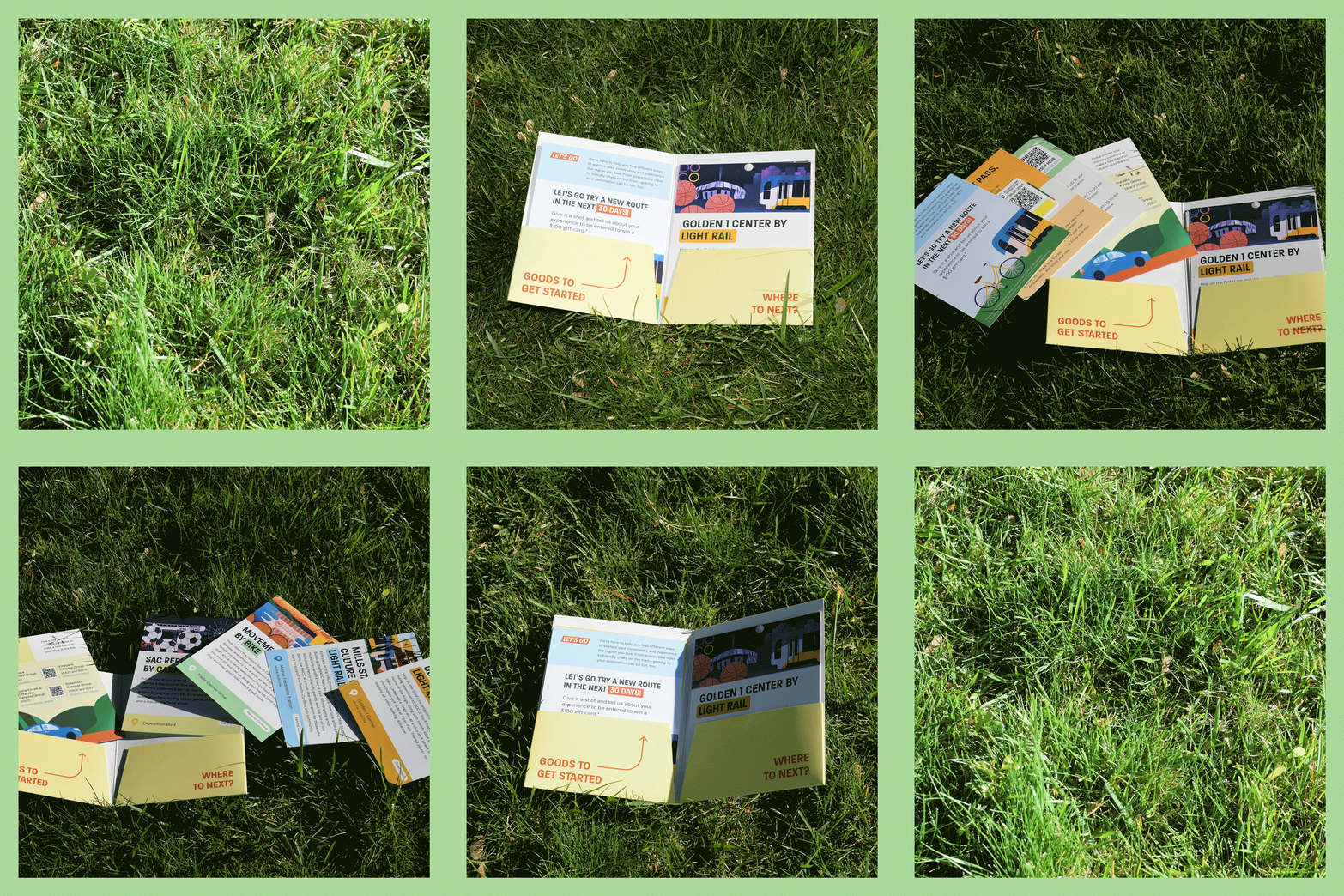
Adventure Kits
kits contained essential items, notably highlighting eight destination spots in Sacramento. Each spot encouraged participants to try a new mode of transportation (biking, carpool, or transit) and featured our upcoming events to guide them in exploring these new modes.


Illustrated Destination Spots
We created eight unique illustrations of Sacramento's destination spots, each emphasizing a specific mode of transportation to encourage alternative travel.


Engagement & Outreach Collateral
We developed compelling collateral and narratives for marketing awareness, designed to inspire and educate the public on trying new, sustainable modes of transportation.
.png)
Phase 3: Optimization & Measurement
Analytics & User Behavior Exploration
I leveraged data analytics to gain deep insights into how users interacted with our digital platforms and content. We continuously monitored key performance indicators (KPIs) and user behaviors, including clicks, form submissions, page views, time on site, and other relevant interactions. This provided clues to user engagement, content effectiveness, and conversion rates, allowing for real-time adjustments.
Designing the Email Campaign
I built out the design. Using the data collected weekly depending on the platform, and analyzed based on performances related to user behaviors, including clicks, form submissions, page views, time on site, and other relevant interactions. Upon order processing, participants received an instant email initiating a 30-day automated email series designed to guide and engage them:
-
Day 1: Welcome & Getting Started: This email welcomed participants, provided initial instructions, encouraged them to complete a first survey incentivized with rewards, and listed upcoming events.
-
Day 7: Event Reminder: A reminder email highlighting upcoming program events.
-
Day 15: Resources & Optional Survey: Participants received educational resources about alternative transportation modes, along with an optional second survey.
-
Day 30: Congratulations & Final Survey: A congratulatory message on completing the challenge, a reminder of general resources, and a final survey to gather comprehensive feedback.

A/B Testing
We employed a rigorous A/B testing framework to identify the most effective communication channels and content variations. We implemented weekly rotations of different platforms (e.g., social media channels, email subject lines, website layouts) and content elements to determine which performed best in terms of engagement, click-through rates, and ultimately, conversion rates. This iterative process ensured continuous improvement of our outreach efforts.
Designing the Survey
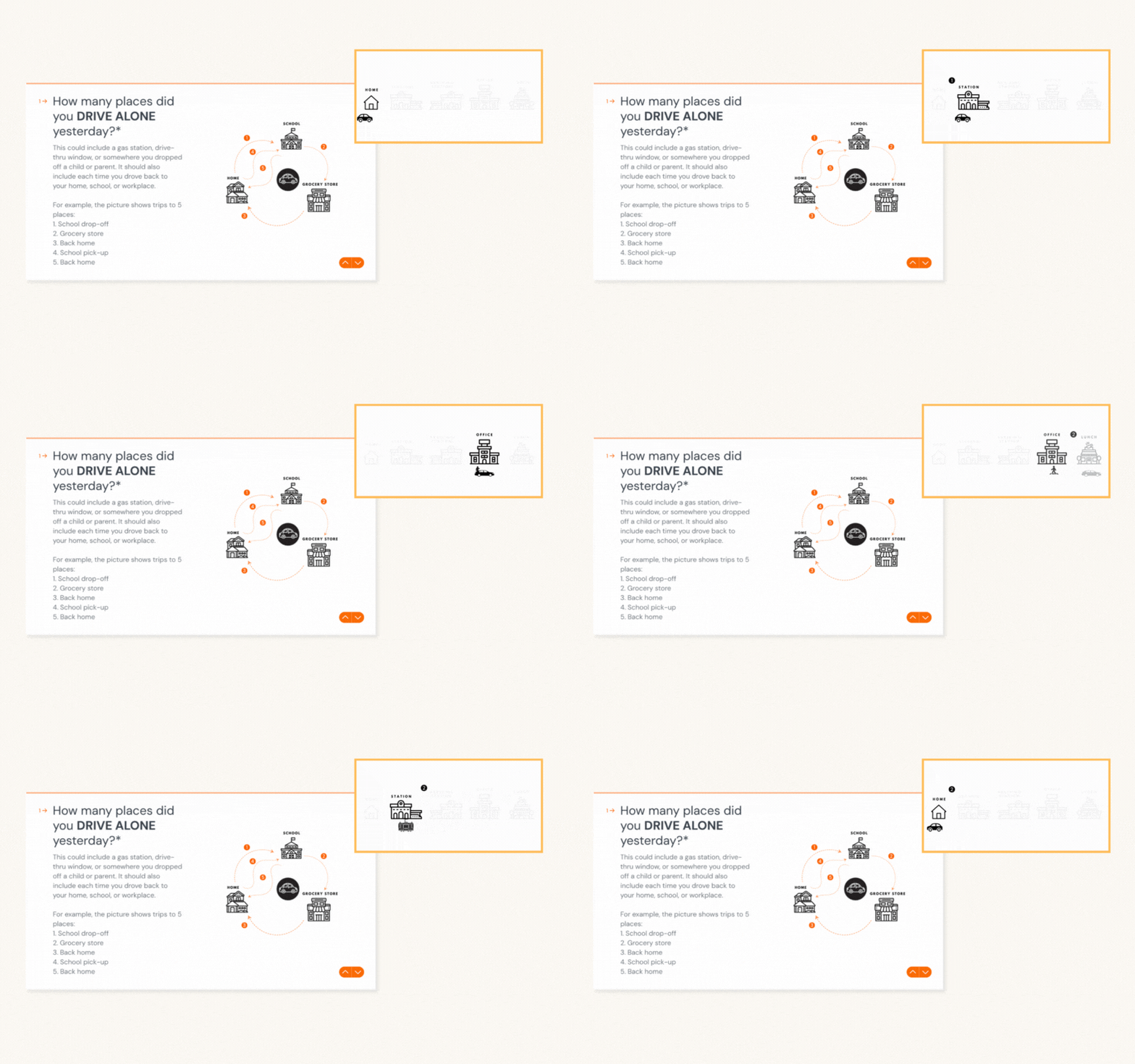
A key component of our goals was to track trips visited per mode, with a specific aim to encourage participants to take fewer trips by car. To support this, I created clear visuals and motion demonstrating what a "trip per mode" looked like and how it was counted within our tracking system. The visuals were integrated into our survey testing to ensure participants accurately understood how to log their trips and contribute to our car-reduction objective.
Recap
Key Learnings
Let's Go provided crucial insights into effective behavior change strategies. Persona-driven design and real-world field studies were fundamental, ensuring our initiatives were deeply relevant to user needs and local transportation realities.
We learned that incentivized surveys effectively gathered valuable data, while our 30-day automated email journey was vital for consistent participant engagement and education. Crucially, visual communication simplified complex concepts like "trips per mode," aiding accurate tracking.
Finally, continuous A/B testing proved essential for optimizing our outreach in real-time. This holistic approach demonstrated that user-centered design, combined with data-driven optimization, is key to successfully promoting sustainable transportation.


